Valuable lessons

In the early 2000s, I returned to the Metropolitan Police in London after a period of absence due to a breakdown. The time away had been a personal crucible, a space in which I came face-to-face with the impact of exclusion, diversity, and inclusion (EDI) failures—not just as a police officer but as a Black, gay man in a system not built for me. That experience sparked a deep sense of purpose. I knew I had to do something to ensure others wouldn’t have to walk the same painful path.
As luck would have it, while chatting in the station car park, I learned about an opening in the Diversity Training Unit. The timing couldn’t have been more perfect; the unit had been established in the wake of the Stephen Lawrence Inquiry to deliver what was then called Community and Race Relations training across the police service. For me, this was more than just a job—it felt like an answer to a personal prayer.
Before stepping into this new role, I needed to complete a six-week residential course designed to explore the complexities of race, community, and resilience in the policing context. On the first day, as I walked into the room, I found myself scanning the faces of my 15 fellow delegates. It didn’t take long to realise that I was the only Black person in the room. That familiar, uneasy inner voice crept in: “Will I be a resource or a delegate? Will I be tokenised? Am I going to be expected to validate every aspect of this course with my personal experiences as a Black man?”
Then Malcolm, our instructor, walked in. A white man, scruffy beard, stale tobacco smell, and a worn tweed jacket. Immediately, my mind raced with doubt—had I made the right decision? Was this really the space where I could make a difference? But as the course unfolded, my assumptions and fears began to dissolve.
Malcolm wasn’t what I had expected. His depth of knowledge about the Black experience, his insights into the complex dynamics of race and policing, and his ability to articulate concepts I had only felt but never fully understood—it was astonishing. I had grown up Black, lived Black, but Malcolm helped me see the bigger picture, the historical and social forces shaping the world I navigated. He didn’t ask me to validate or verify a single point; instead, he offered me a perspective I hadn’t even known I was missing.
Curiosity got the better of me one evening, and over a drink, I asked him how he knew so much. What he shared left a lasting impression. He told me that he had been a young police officer in Brixton during the 1980s uprisings. The sheer intensity of the anger within the Black community shocked him and made him realise how little if any understanding he had about the community he was expected to police. After the dust settled, he knew he had to understand the root of that anger. Malcolm started visiting local Black barbershops and cafés—at first, he was rejected, even ridiculed, but he persisted. Over time, people began to see his sincerity, and they opened up. They shared their stories, recommended books, and he immersed himself in learning about the lived experiences of the people he once struggled to understand.
Malcolm’s journey taught me profound lessons that I carry with me to this day, especially in my work with EDI initiatives:
• Suspend judgment. When engaging with groups, I’ve learned to step back and truly see the person, not the labels placed on them.
• Listen deeply. There’s a difference between hearing and listening. Only through the latter do we begin to understand.
• Practice unconditional positive regard. This means accepting others without judgment and believing in their potential for growth and change irrespective of their background or identity.
• Lead with heart. The most important lesson Malcolm taught me was this: EDI work isn’t just about someone’s race, gender, or orientation—it’s about their heart. It’s about caring enough to make yourself aware enough to make a difference.
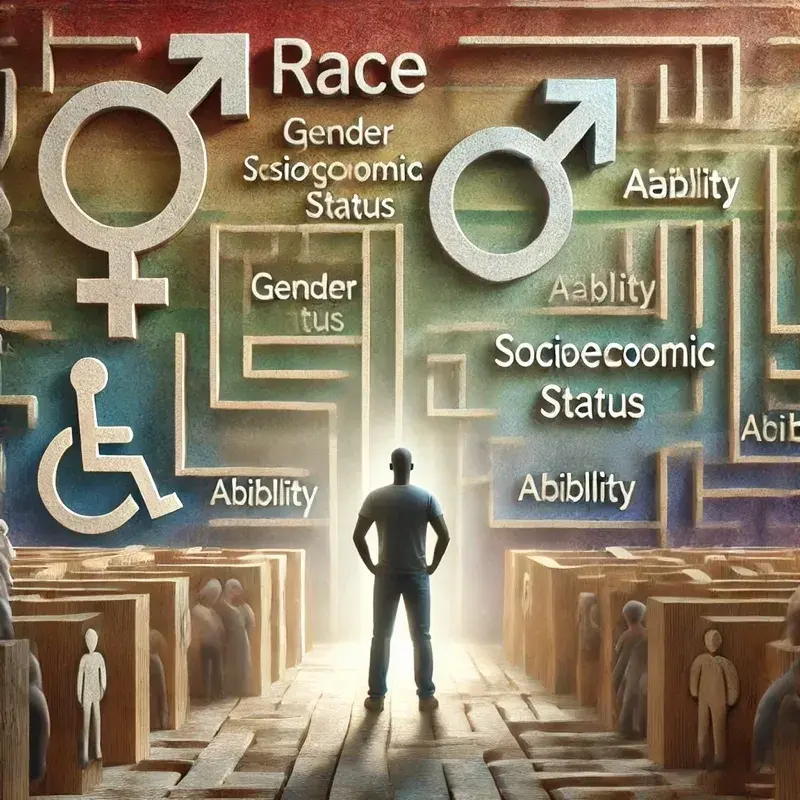
In the years since that course, I’ve come to believe that we cannot approach diversity and inclusion in silos. This isn’t a Black, White, or Brown issue—it’s a human issue. We live in a shared world, and we all bear the weight of past and present injustices. The only way forward is together. I’ve seen firsthand how transformative it can be when people from different backgrounds work towards a common goal of understanding and progress.
The work isn’t easy. The mountains we climb in the name of equality and justice can seem insurmountable at times. But when you stumble, and a hand reaches out to help, does it truly matter if that hand is Black or White, gay or straight etc? What truly matters is that someone cared enough to help, and that’s what makes the difference.
So, as we continue this journey toward building more inclusive, understanding communities, let us remember the power of connection, curiosity, and compassion. In the end, it’s not about the labels that define us, but about the heart that drives us forward.